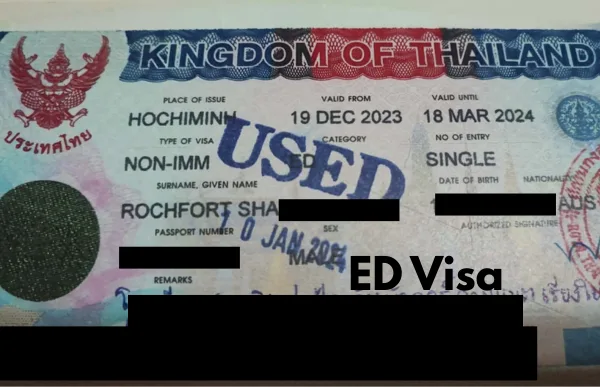
What Is ED Visa Combat Training
The ED visa for combat training covers boxing, wrestling, mixed martial arts (MMA), judo, and other combat sports at Education Ministry-approved facilities. Like Muay Thai ED visa, it requires a 3-month minimum commitment and allows you to live legally while training.
Combat training ED visa is less common than Muay Thai or language study. It's a niche category but legitimate. Fewer foreigners pursue it, which means less competition for visa approval and sometimes more flexible pricing from training facilities.
Combat Sports Programs Available
Boxing
Western boxing at professional gyms. Teaches stance, footwork, hand combinations, defensive tactics. Available in most major cities. Quality varies from basic fitness boxing to serious competitive training.
Wrestling
Greco-Roman or freestyle wrestling. Less common in Thailand but available at some facilities. Often combined with other grappling arts.
Mixed Martial Arts (MMA)
Combines boxing, wrestling, judo, and submission techniques. Growing popularity in Thailand. Full-contact training with proper safety protocols.
Other Martial Arts
Judo, taekwondo, karate, and other martial arts are also recognized. Quality depends on facility and instructor credentials.
Quick Facts
| Detail | Combat Training ED Visa |
|---|---|
| Initial Duration | 90 days |
| Minimum Commitment | 3 months (required for ED visa) |
| Renewal Period | 1 year (with continued training) |
| Monthly Cost Range | 6,000-12,000 THB |
| Visa Cost | Free |
| Training Hours/Week | 12-20+ hours depending on program |
| Income Requirement | None |
Cost Breakdown for Combat Training
| Sport | Facility Type | Cost/Month (THB) | 3-Month Total (THB) |
|---|---|---|---|
| Boxing | Community Gym | 6,000-8,000 | 18,000-24,000 |
| Boxing | Professional Boxing Gym | 8,000-10,000 | 24,000-30,000 |
| Wrestling | Specialized Facility | 7,000-10,000 | 21,000-30,000 |
| MMA | MMA Training Centre | 8,000-12,000 | 24,000-36,000 |
| Other Martial Arts | Variable | 6,000-10,000 | 18,000-30,000 |
Typical Training Schedule
Most facilities offer flexible scheduling. Common patterns:
- Morning session: 6:00 AM - 8:00 AM (technique, conditioning)
- Evening session: 4:00 PM - 6:00 PM or 5:00 PM - 7:00 PM (sparring, intensity training)
- Weekend classes: Optional supplemental training
- Recovery days: Usually 1-2 per week
Skill Progression
Month 1
Fundamentals focus. Learning proper stance, footwork, basic techniques, safety protocols. Expect muscle soreness and gradual conditioning improvement.
Month 2-3
Technical development. You can string combinations together. Light to moderate sparring begins (with proper headgear and protection). Fitness improves noticeably.
Month 4+
If continuing, you're ready for more intense sparring, competitive training, or possibly your first amateur match if interested.
Pros and Cons
Pros
- No income or savings requirement
- Cheapest combat sports option (6-12K THB/month, less than Muay Thai)
- Niche category means less competition for visa spots
- Real skill development with international coaches
- Renewable annually if you continue training
- Strong community of international competitors
Cons
- 3-month minimum commitment required
- High physical demands and injury risk
- Immigration monitors attendance
- Fewer facilities than Muay Thai or language schools
- Not ideal unless seriously interested in the sport
- Border runs not allowed (stay and train)
Renewal and Extension
After your initial 90 days expire, you can extend for one year by showing your continued training enrolment to Thai Immigration. As long as you've maintained 80%+ attendance, they'll approve another year.
Immigration periodically verifies attendance. This is a real commitment, not a circumvention visa you can ignore.
Application Process
Step 1: Choose Your Sport and Facility
Decide on boxing, wrestling, MMA, or other combat sport. Research facilities. Verify they're Ministry-approved for ED visa (ask directly). Trial session if possible.
Step 2: Enrol for 3 Months
Register and pay fees. Get official enrolment letter specifying your sport, schedule, and duration. This is your key document.
Step 3: Prepare Documents
- Passport and copy
- Enrolment letter from facility
- TM.6 application form
- 4x6cm passport photo
- Accommodation proof (lease, hotel booking)
Step 4: Submit at Thai Immigration
Visit Thai Immigration (in Chiang Mai: 71 M.3 Airport Road). Submit documents. Processing: 2-3 days. Cost: Free.
Step 5: Begin Training
Attend consistently. Immigration will verify through your facility's attendance records.
Key Takeaways
- Combat training ED visa requires 3-month minimum. It's a real commitment, not a quick option.
- Cheapest combat sports visa option (6-12K THB/month, 18-36K for 3 months).
- Fewer foreigners use this option. Less crowded than Muay Thai or language school visas.
- You must actually train regularly. Immigration spot-checks. This is enforced seriously.
- Verify your facility is Ministry-approved before signing. Not all gyms are.
- Check CMLocals.com/ed-visa for official requirements before applying.
Ready to apply? Full step-by-step guide, document checklist, and current processing times at CMLocals: ED Visa Combat Training Guide.
Guru Tip
For combat training ED visas, the camp's accreditation status matters more than its reputation. A world-class Muay Thai gym with no Ministry of Education licence cannot process your ED visa, regardless of how many champions it has produced. Always ask directly whether the camp can provide an ED visa letter, and get written confirmation before paying tuition or booking flights. The Chiang Mai camps most consistently holding valid ED accreditation are not always the most Instagram-famous ones.
Can I get an ED visa for combat sports training?
Yes. Boxing, wrestling, and other martial arts training at Ministry of Education-licensed facilities qualify for the ED visa. The facility must hold specific educational accreditation, not just a business licence. A 3-month minimum commitment is typically required for the initial visa approval.
Which combat sports qualify for an ED visa in Thailand?
Muay Thai, boxing, wrestling, Brazilian jiu-jitsu (at licensed facilities), and other martial arts with approved school accreditation. The qualifying factor is the school's licence, not the sport itself. Some sports that are common in Thailand do not have accredited training facilities and therefore cannot support an ED visa application.
How many hours per week must I train on a combat ED visa?
Requirements vary by school but typically 10 to 20 hours per week. Immigration checks attendance records at the 90-day report and renewal stages. Consistent training records maintained by the school are your evidence. If you miss extended periods due to injury, report this to both the school and immigration proactively rather than hoping it is not noticed.
Can I compete in fights while on an ED visa?
Training is permitted. Competing for prize money is a grey area. The ED visa authorises educational activity, not professional competition. If you are competing at the amateur level without payment, the risk is low. Competing professionally for money while on a study visa without a work permit is legally problematic. Confirm with your school and an immigration lawyer if competition is your goal.
How do I find a combat sports camp with ED visa accreditation in Chiang Mai?
Ask the camp directly whether they hold a current Ministry of Education licence for ED visa students. Reputable camps will answer this question immediately and provide documentation. If a camp is evasive or promises it can arrange the visa through unofficial channels, walk away. The ED visa is processed at the consulate, not arranged informally by the training facility.