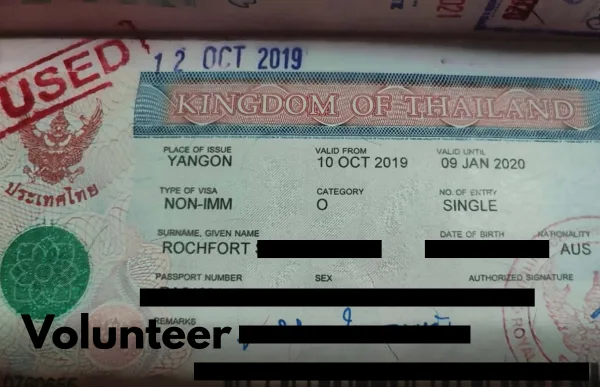
What is the ED Visa?
The ED (Educational) Visa is Thailand's study visa. It grants a 1-year stay while you pursue approved education. Thai language, Muay Thai, music, or other Ministry-approved courses all qualify. It is the legitimate path to long-term settlement if you are genuinely committed to learning.
Unlike tourist visas or border runs, the ED visa signals genuine intent to Immigration. You are not cycling through entries. You are investing in yourself. This makes ED not just legal, but respected. I've watched enough people use this route to actually settle here that I trust it more than most alternatives.
The ED visa costs around 3,000-5,000 THB per year depending on your school. Most people spend 200-400 USD on tuition. You get 1 year validity. Renewable annually. This is the visa of choice for people who want to stay long-term without complications.
ED Visa: The Five Most Popular Types
Emergency Self-Defence ED Visa
Self-defence training at Ministry-approved institutions is now the top ED visa option in Chiang Mai. Core Combat Chiang Mai is the licensed provider, offering structured self-defence curriculum and 12-month ED visas. Cost is 55,000 THB for the full year including visa processing, school fees, and immigration paperwork.
This is fast-track compared to other visa types. You get focused, practical training. No long daily commitments like language study. The program is designed for self-defence efficacy, fitness, and confidence building. You train 2-3 hours per day with professional instruction. Learn more at CMLocals Emergency Self-Defence ED Visa Guide.
Thai Language ED Visa
Study Thai at accredited language schools. You attend classes daily (usually 2-4 hours per day), learn to read, write, and speak Thai, and get a 1-year stamp. Schools typically require 80 percent attendance. Cost is 25,000-50,000 THB per year plus visa fees.
Thai language is practical. You actually use what you learn. Locals respect you for trying. After a year, most people can hold basic conversations and read menus. Read the full details at CMLocals Thai Language ED Visa Guide.
Muay Thai ED Visa
Train Muay Thai at Ministry-approved camps. You attend training sessions daily (usually 2-3 hours), train under professional coaches, and get a 1-year stamp. Camps require proof of consistent attendance. Cost is 30,000-100,000 THB per year depending on intensity and location.
Muay Thai is physical. You will be tired. You will improve. You will build community with other trainees. This is not casual. Camps expect commitment. After a year, expect solid technique and real fitness gains. Find current gyms and requirements at CMLocals Muay Thai ED Visa Guide.
Hand-to-Hand Combat ED Visa
Boxing, wrestling, MMA, and other combat sports at Ministry-approved facilities. Similar structure to Muay Thai but with different disciplines. You train daily with formal curriculum and get a 1-year stamp. Cost varies by gym and intensity (30,000-80,000 THB per year).
Combat training is effective and less crowded than Muay Thai. Check availability and requirements at CMLocals Hand-to-Hand Combat ED Visa Guide.
Volunteer ED Visa
Work with registered NGOs and charitable organizations. You volunteer 2-3 hours per day at an approved organization and get a 1-year stamp. Completely free visa (no fees). Cost is only your time and living expenses.
This requires genuine commitment to the organization. Immigration verifies your work. Learn more at CMLocals Volunteer ED Visa Guide.
ED Visa Quick Facts Table
| Aspect | Details |
|---|---|
| Duration | 1 year (renewable annually) |
| Visa Fee | 3,000-5,000 THB |
| School Tuition | 25,000-100,000 THB per year |
| Attendance Requirement | Usually 80 percent minimum |
| Work Allowed | No, unless work permit obtained separately |
| Renewal | Can renew annually at Immigration |
| Eligibility | Any nationality with approved school enrollment |
How to Get an ED Visa: Step by Step
Step 1: Choose Your School. Research schools that offer Ministry-approved courses. Thai language schools are easiest (lots of options, clear approval status). Muay Thai camps next. Other courses require more verification. Pick based on actual interest, not just visa convenience.
Step 2: Enroll and Get Documentation. Pay tuition (at least partial). Get a letter from the school stating you are enrolled, the course dates, attendance requirements, and tuition paid. You will need this for the visa application.
Step 3: Gather Documents. Passport (valid 6 months or more), school enrollment letter, passport photo (4x6cm), TM.16 form (ED visa application), TM.17 form (residence notification), police clearance (some schools require), and proof of funds (200,000 THB or equivalent).
Step 4: Apply at Immigration. Go to your local Thai Immigration office with all documents. Process takes 1-2 weeks. Cost is 3,000-5,000 THB. You receive a 1-year stamp in your passport.
Step 5: Maintain Your Classes. Attend at least 80 percent of classes (varies by school). Immigration may conduct spot checks. Stay consistent. Your stamp depends on you being a genuine student.
Common Mistakes People Make
- Enrolling at a school with unclear Ministry approval. Verify before paying. Ask the school directly.
- Treating ED visa as just another border run. You must actually attend classes. Immigration takes this seriously.
- Picking a course you do not care about. You are committing a year. Learn something you actually want to learn.
- Not keeping proof of attendance. Schools should give you a record. Immigration may ask for it.
- Overstaying or working illegally. ED visa does not allow work. Work permit is separate and difficult. Stay legal.
ED Visa vs. Other Long-Stay Options
ED is ideal if you are actually committed to learning. If you just want to stay in Thailand without working or studying, DTV visa (for digital nomads) or Retirement visa (if 50 or older) might fit better. If you have family ties, Marriage visa might be right. Choose based on your actual situation, not just the easiest path.
Key Takeaways
- Emergency Self-Defence (Core Combat) is the current top ED visa option in Chiang Mai for 2026.
- ED visa grants 1 year for approved study. Renewable annually indefinitely.
- Five main types: self-defence, Thai language, Muay Thai, combat training, volunteer.
- Cost ranges 25,000-55,000 THB per year depending on program type.
- Requires genuine commitment and attendance. Immigration verifies enrollment.
- Signals honest intent to Thai authorities. Strong legal standing long-term.
- Check CMLocals.com for current requirements and program details for each type.
- No work allowed on ED visa. This is strictly an educational visa, not a work visa.
Ready to apply? Full step-by-step guide, document checklist, and current processing times at CMLocals: ED Visa Guide.
Guru Tip
The ED visa gets more scrutiny at the 90-day report and renewal stage than it used to. Immigration officers will ask about your studies. They will sometimes request evidence: a test result, a class certificate, a teacher's written assessment. If you are on an ED visa, actually attend the classes. Keep a simple record: a photo of the whiteboard each session, a receipt for monthly tuition, a vocabulary notebook. These take 30 seconds to create and take away any vulnerability at renewal time. Immigration is not hostile to genuine students. It is thorough about distinguishing them from those gaming the system.
What is the ED visa Thailand?
The ED (Educational) Visa is a 1-year stay permission for foreign nationals enrolled in approved educational programs in Thailand. Qualifying courses include Thai language study, Muay Thai, martial arts, music, cooking, and other Ministry of Education-approved programs. It requires genuine enrolment and regular attendance.
How long does an ED visa last?
The initial grant is 1 year with a 90-day permitted stay per entry. You must do a 90-day report with immigration and can extend the permitted stay if you remain enrolled and attending. The total stay on an ED can extend to multiple years if you continue your studies and meet renewal requirements.
Can I work on an ED visa in Thailand?
No. The ED visa is a study visa only. Working in any capacity, paid or unpaid, requires a separate work permit. This is a hard legal line. Freelancing for overseas clients is a grey area that carries risk. If you need to work while studying, the DTV visa is a more appropriate choice for remote workers, see CMLocals' guide to current Destination Thailand Visa requirements.
What classes qualify for an ED visa?
The school must be licensed by the Thai Ministry of Education. Thai language schools, Muay Thai camps with educational accreditation, cooking schools, and some music schools qualify. Not every private language school or camp is licensed. Confirm the school's ED visa accreditation before enrolling.
How many hours per week do I need to attend for an ED visa?
Minimum attendance requirements vary by school and program. Typically 5 to 10 hours per week. Immigration checks attendance records at the 90-day report and renewal stage. Low attendance or gaps without explanation are grounds for refusal or cancellation. Keep your attendance consistent throughout the visa period.