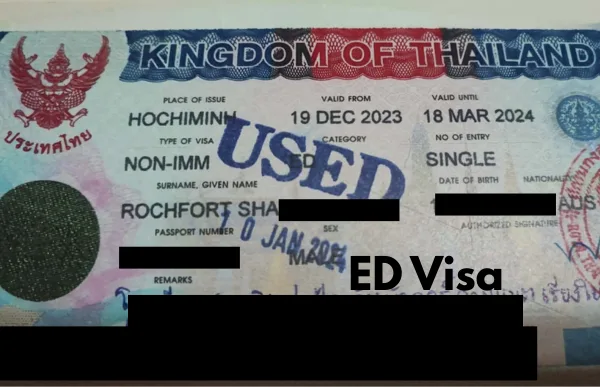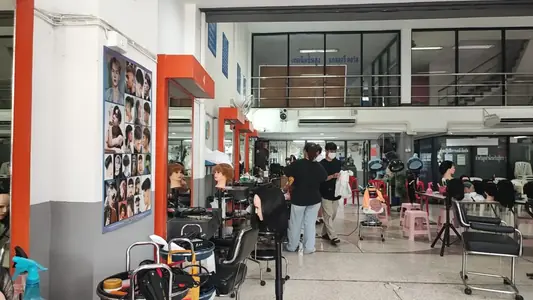
What Is ED Visa Thai Language
The ED visa for Thai language study allows you to enrol at an Education Ministry-approved Thai language school and live in Thailand legally while you study. It's the most flexible and affordable long-stay visa for learning the language.
The visa itself is free. You only pay the school. Schools set their own fees, which typically range from 40,000 to 80,000 THB per year depending on curriculum intensity and teaching hours.
Which Schools Offer Thai Language Programs
Dozens of Thai language schools across Thailand are Ministry-approved. Major cities (Bangkok, Chiang Mai, Phuket) have the most options. Chiang Mai has excellent schools at competitive prices.
Popular schools in Chiang Mai include established institutions with English-speaking instructors and flexible schedules. Prices vary from 40,000 THB per year for part-time (10-15 hours/week) to 80,000 THB for intensive (20-25 hours/week).
Quick Facts
| Detail | Thai Language ED Visa |
|---|---|
| Initial Duration | 90 days |
| Renewal Period | 1 year (can renew indefinitely) |
| Annual Cost (School) | 40,000-80,000 THB |
| Visa Cost | Free |
| Full-Time Hours | 20-25 hours per week |
| Part-Time Hours | 10-15 hours per week |
| Income Requirement | None |
Language Levels and Duration
Beginner (Level 1-2)
No Thai language experience required. You'll learn basic Thai alphabet (which takes 2-4 weeks), greetings, simple conversations, survival phrases. Duration: 6-12 months for part-time, 2-3 months for intensive.
Intermediate (Level 3-4)
Assumed prior Thai study. You'll learn grammar, sentence construction, reading comprehension, practical daily conversations. Duration: 6-12 months part-time.
Advanced (Level 5+)
Upper-intermediate to fluent level. Business Thai, written Thai, nuanced conversation, cultural context. Duration: 6-12+ months depending on your goal.
Cost Breakdown for Thai Language Schools
| Option | Hours/Week | Annual Cost (THB) | Monthly Cost (THB) |
|---|---|---|---|
| Part-Time (Evening) | 10-12 | 40,000-50,000 | 3,300-4,200 |
| Part-Time (Morning/Afternoon) | 15-18 | 50,000-65,000 | 4,200-5,400 |
| Full-Time Intensive | 20-25 | 65,000-80,000 | 5,400-6,700 |
| Private/One-to-One | Variable | 70,000-150,000+ | 5,800-12,500+ |
What You'll Learn
Thai language schools follow Ministry-approved curricula. Typical progression:
- Thai alphabet and tones (foundation)
- Conversational Thai for daily life
- Grammar structure and sentence patterns
- Reading and writing skills
- Cultural context and polite forms
- Listening comprehension
- Level-based certificates upon completion
Typical Daily Schedule
Most schools offer flexible scheduling. Common patterns:
- Morning classes: 8:30 AM - 12:30 PM (4 hours, most intensive)
- Afternoon classes: 1:00 PM - 4:00 PM (3 hours, moderate)
- Evening classes: 5:00 PM - 7:00 PM (2 hours, casual learners)
- Flexible/Online hybrid: Mix of live and recorded lessons
Pros and Cons of Thai Language ED Visa
Pros
- No income or savings requirement
- Affordable (40-80K THB/year is cheaper than most visas)
- Flexible schedules (part-time options available)
- You actually learn Thai (bonus practical skill)
- Renewable annually as long as enrolled
- Great stepping stone to other visas later
Cons
- You must actually attend classes (Immigration spot-checks)
- Initial 90-day grant only (must extend after)
- Not ideal if you don't want to study
- Language learning takes time (fluency takes years)
- Border runs not allowed (you stay and study)
Renewal and Extension
After your initial 90 days expire, you extend for one full year by bringing your updated enrolment letter to Thai Immigration. As long as you've attended classes (usually 80%+ attendance required), they'll stamp you for another year.
You can renew indefinitely as long as you stay enrolled. Cost remains free. Schools sometimes offer discounts for multi-year enrolment.
Application Process
Step 1: Choose a School
Research Ministry-approved Thai language schools. Many offer trial classes. Pick one that fits your budget, schedule, and learning style.
Step 2: Enrol
Complete registration and pay fees. The school issues you an official enrolment letter. This is your key document.
Step 3: Prepare Documents
- Passport and copy
- Enrolment letter from school
- TM.6 form (application form)
- 4x6cm passport photo
- Accommodation proof (lease, hotel booking)
Step 4: Apply at Immigration
Visit Thai Immigration (in Chiang Mai: 71 M.3 Airport Road). Submit documents. Processing: 2-3 days. Cost: Free.
Step 5: Start Classes
Show up to day one. Attend regularly. Renewal depends on attendance records.
Key Takeaways
- Thai language ED visa is the most affordable long-stay option (40-80K THB/year).
- Available at dozens of Ministry-approved schools across Thailand, with excellent options in Chiang Mai.
- Part-time and full-time schedules available. You control intensity.
- You must attend classes regularly (spot checks happen). It's a real commitment, not a fake visa.
- Best used for year one while deciding if Thailand is permanent. Then transition to DTV or Retirement visa.
- Check CMLocals.com/ed-visa/thai-language for official requirements before applying.
Ready to apply? Full step-by-step guide, document checklist, and current processing times at CMLocals: ED Visa Thai Language Guide.
Guru Tip
Chiang Mai has two distinct clusters of Thai language schools for ED visa purposes. The Old City schools are convenient, social, and well-practised at processing foreign ED students. The CMU-affiliated options near Nimman have more academic structure and work better if you genuinely want language depth rather than just visa status. If you are in Chiang Mai for six months or more and want real Thai, the CMU programs are worth the extra effort to enrol. If you just need a legitimate visa framework while you settle in, the Old City cluster is easier to navigate and more forgiving on scheduling.
Can I get an ED visa to study Thai language?
Yes. Thai language study is one of the most common qualifying activities for the ED visa. The school must hold Ministry of Education approval. Approved schools in Chiang Mai include several Old City language centres and university-affiliated programs. Confirm accreditation before enrolling.
How many hours per week do I need to study Thai for an ED visa?
Minimum 5 to 10 hours per week depending on the school and program. Most schools offer both full-time (15-20 hours) and part-time options. Immigration checks attendance at 90-day reports. Consistent attendance is essential. Missing classes without documentation is the most common reason for ED visa non-renewal.
Do I need prior Thai knowledge to qualify for a Thai language ED visa?
No. Beginner programs are available at all approved schools. You can start at complete beginner level and progress through intermediate and advanced stages while maintaining ED status. The visa does not require you to reach a specific proficiency level, only to attend and demonstrate genuine participation.
How long does the Thai language ED visa process take?
After enrolling at an approved school and receiving your enrolment letter, the consulate application typically takes 1 to 3 business days for in-person applications at major consulates like Kuala Lumpur or Singapore. Some consulates process same-day. Allow 2 to 4 weeks total for planning the trip, application, and return.
Which Chiang Mai schools are approved for Thai language ED visas?
Several Old City language centres hold current accreditation. CMU's Thai Language Institute also operates approved programs. Ask the school directly whether they can provide an ED visa invitation letter and what their current processing success rate is. Do not rely on forum recommendations more than 12 months old as accreditation status changes.